
Executive Summary
This report documents the design, progress, and current status of a humanitarian education initiative led by Gash Group in Al-Mawasi, Khan Younis, in the southern Gaza Strip. The project establishes a free study and workspace where displaced school and university students can continue their lessons, complete academic activities, and prepare for exams in a safe and supportive environment.
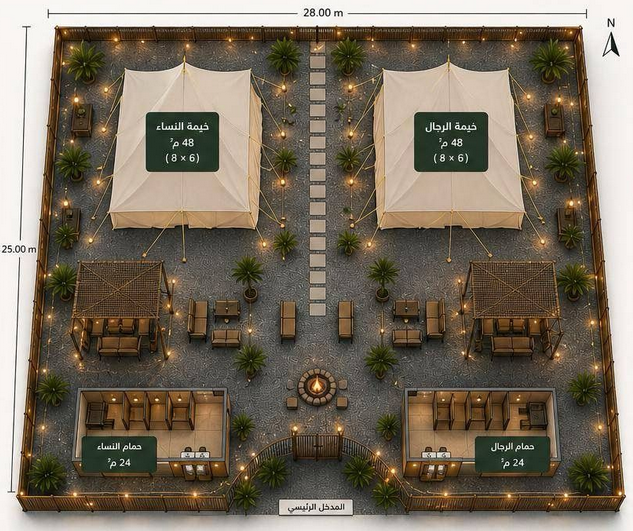
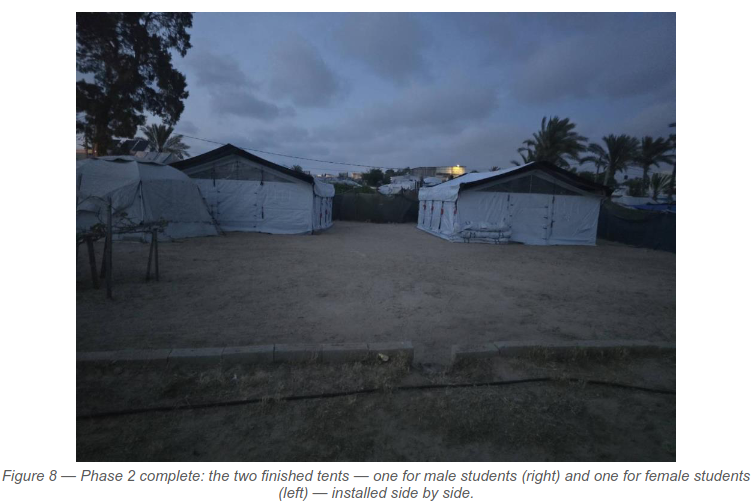
Following the recent war on Gaza, Palestinian students at every educational level have suffered severe disruption to their academic progress. Access to electricity and stable internet has become extremely difficult, and most homes and schools are no longer suitable for study. In response, Gash Group rented a plot of land in Al-Mawasi, cleaned and prepared it, and installed two large, separated tents — one for female students and one for male students — to guarantee privacy and a comfortable environment for everyone.
Phase 3 is currently underway and focuses on furnishing the space and providing essential services: private toilets for both sections, study tables and chairs, and the equipment students need to sit and work properly. Through this project, Gash Group aims to provide a supportive educational environment that helps students continue their learning journey despite the difficult conditions in the Gaza Strip.
Background and Context
The recent war on Gaza has had a devastating effect on the educational system. Schools and universities have been damaged or destroyed, families have been displaced multiple times, and the basic infrastructure that supports learning — electricity, internet connectivity, safe indoor space, lighting, and quiet — has collapsed across much of the Strip.
Students at every level, from primary school children to university undergraduates and postgraduates, have been deeply affected. Many have lost months or years of structured learning.
Online courses, remote exams, and digital assignments — which became the only remaining channel for continuing studies — are inaccessible to most students because of unreliable electricity and very limited internet.
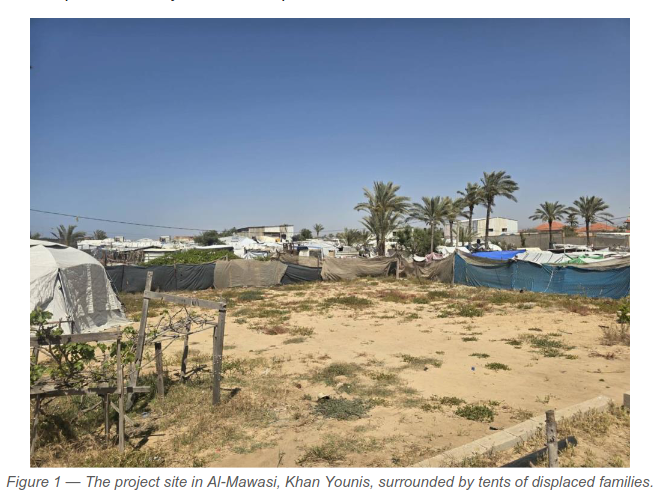
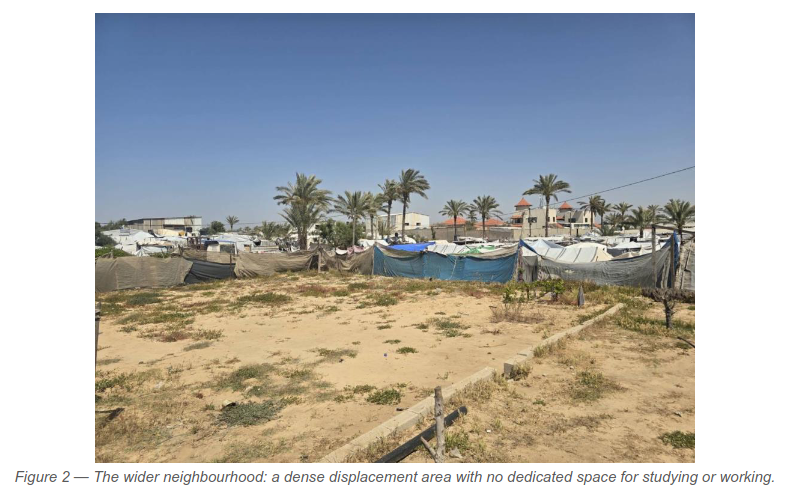
In the Al-Mawasi area of Khan Younis, where large numbers of displaced families are now living in tents and makeshift shelters, the need for a dedicated, equipped study environment is acute.
The two images below illustrate the surrounding context: a densely populated displacement area where private space for study is almost impossible to find.
Project Goal and Objectives
Overall Goal
To provide displaced Palestinian students in Al-Mawasi, Khan Younis with a safe, equipped, and supportive study and workspace that allows them to continue their education, complete their academic activities, and sit their exams despite the severe conditions caused by the war on Gaza.
Specific Objectives
- Provide a dedicated, safe physical space for studying, away from the noise and overcrowding of family shelters.
- Guarantee access to electricity and the internet — the two services most needed for online classes, research, and exams.
- Ensure full privacy and comfort by providing two separate tents: one for female students and one for male students.
- Equip the space with appropriate furniture (tables and chairs) so students can study and work properly.
- Provide private toilet facilities for both sections of the space.
- Contribute to protecting the academic future of school and university students in the southern Gaza Strip.
Project Location
The project is located in Al-Mawasi, Khan Younis, in the southern Gaza Strip. Al-Mawasi has become one of the main areas hosting displaced families during the recent war. A piece of land was rented in this area specifically for the project, then cleaned and prepared so that it would be suitable for receiving students.
Implementation Phases
The project is being delivered in three sequential phases. Phases 1 and 2 are complete; Phase 3 is currently in progress.
Phase 1 — Site Preparation
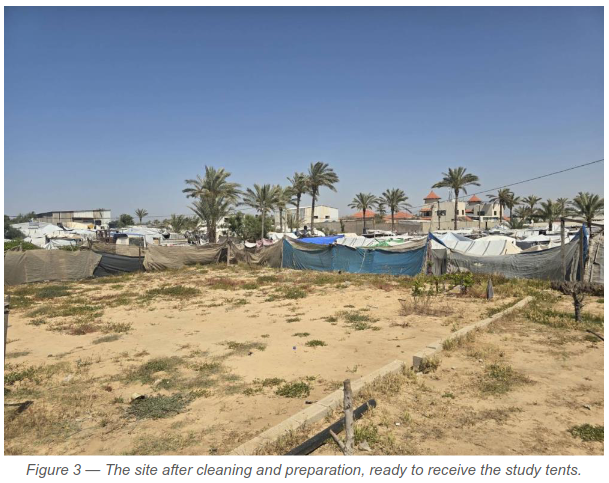
In the first phase, a suitable piece of land was identified and rented in Al-Mawasi. The team then carried out the cleaning and preparation of the area: removing debris and waste, leveling the ground, and organizing the perimeter so the site would be ready to receive the structures planned for the next phase.
The chosen plot is bordered by existing displacement camps on most sides, which makes it easy for nearby student-aged residents to reach the space on foot.
Phase 2 — Installation of the Two Study Tents
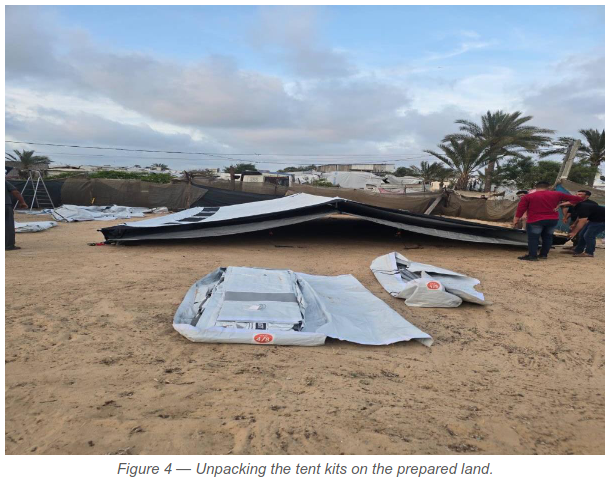
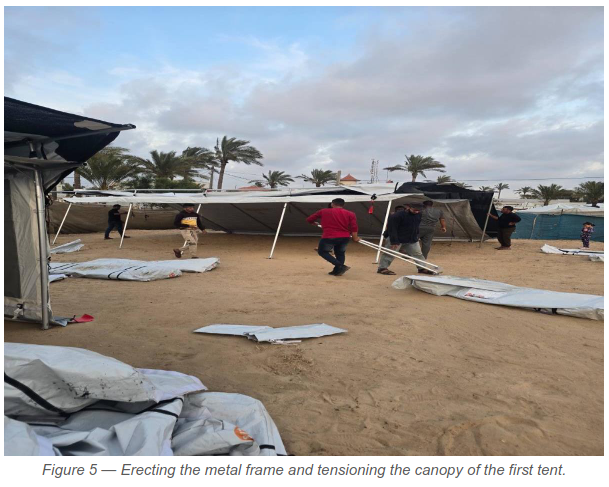
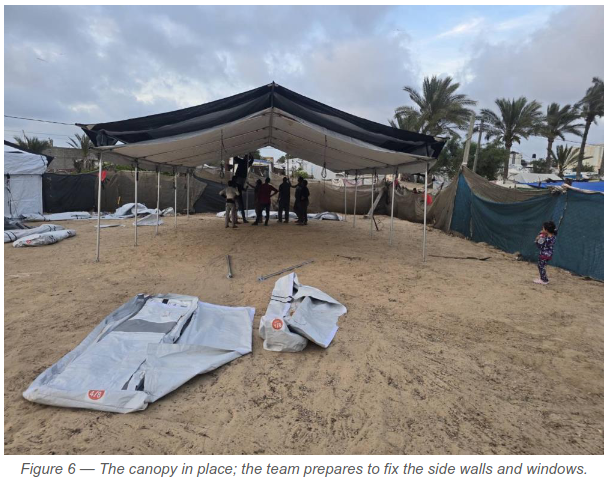
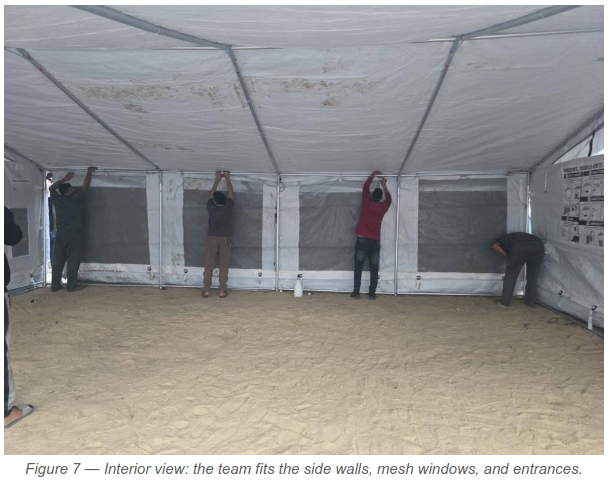
In the second phase, two large, separate tents were installed on the prepared land:
• One tent dedicated to female students.
• One tent dedicated to male students.
This separation was a deliberate design choice in order to ensure complete privacy and to provide a culturally appropriate, comfortable environment for all students.
Phase 3 — Equipping and Furnishing (In Progress)
Phase 3 is currently being implemented and focuses on turning the two tents into a properly equipped study environment. The activities in this phase are:
• Building private toilet facilities for both female and male students, located close to their respective tents.
• Purchasing study tables and chairs in quantities suitable for both tents.
• Equipping the interior so that students can sit comfortably and work for extended periods.
• Setting up reliable electricity and internet access for both tents.
• Final cleaning, lighting, and organization of the space before it is fully opened for students
Once Phase 3 is complete, the two tents will be fully operational and ready to receive students on a daily basis for their lessons, research, online classes, and exams.
Beneficiaries
The direct beneficiaries of the project are school and university students living in and around Al-Mawasi, Khan Younis, who have been displaced by the war on Gaza and no longer have a suitable place to study at home.
Direct Beneficiaries
• Female school and university students — using the women’s tent.
• Male school and university students — using the men’s tent.
• Students preparing for end-of-term exams and final examinations.
• Students enrolled in online courses or remote programs that require electricity and internet accessible school and university students — using the women’s tent.
• Male school and university students — using the men’s tent.
• Students preparing for end-of-term exams and final examinations.
• Students enrolled in online courses or remote programs that require electricity and internet access.
Indirect Beneficiaries
• Families of the students — relieved of the difficulty of providing study space, electricity, and connectivity at home.
• The wider community in Al-Mawasi — which gains a small but visible center of educational activity.
• The Palestinian educational system — which benefits whenever students are able to remain academically active during the crisis.
Achievements to Date
The following milestones have already been delivered:
- A suitable plot of land was identified and rented in Al-Mawasi, Khan Younis.
- The land was fully cleaned, leveled, and prepared for construction and installation.
- Two large tents were received, unpacked, and successfully installed on site.
- Full physical separation between the female and male tents was achieved, ensuring privacy.
- The site is now visibly recognizable as a dedicated educational space within the displacement area.
Next Steps
The project team is now focused on the following immediate next steps within Phase 3:
• Completing construction of the private toilet facilities for both tents.
• Procuring and installing tables and chairs.
• Finalizing the electricity supply and internet connection for both tents.
• Adding interior lighting suitable for evening and night-time study.
• Opening the center for daily use by registered students.
Once these steps are complete, the center will move from setup into routine operation, and Gash Group will begin tracking attendance, study hours, and the academic activities supported by the space.
Operative Challenges
The project is being implemented in an extremely difficult operating environment. The main challenges that affect day-to-day work are:
- Severe shortages of electricity across the southern Gaza Strip.
- Very limited and unstable internet connectivity.
- Difficulty procuring construction materials, furniture, and basic equipment.
- Ongoing displacement of families, which may change the student population in the surrounding area.
- Weather exposure: tent structures require continuous maintenance, especially in rain and wind.
Conclusion
Through this project, Gash Group is providing a tangible, dignified response to one of the quietest but most damaging effects of the war on Gaza: the interruption of education for thousands of school and university students. By renting and preparing a piece of land in Al-Mawasi, Khan Younis, installing two separate tents for female and male students, and equipping the space with the basic services students need — electricity, internet, tables, chairs, and private toilets — the project restores the simple conditions under which young people can continue to learn.
The first two phases have already changed an empty piece of land into a recognizable educational space.
Phase 3 will turn that space into a functioning daily study and work environment.
The goal is straightforward and urgent: to make sure that, despite everything, Palestinian students in Gaza do not lose another year of their education.